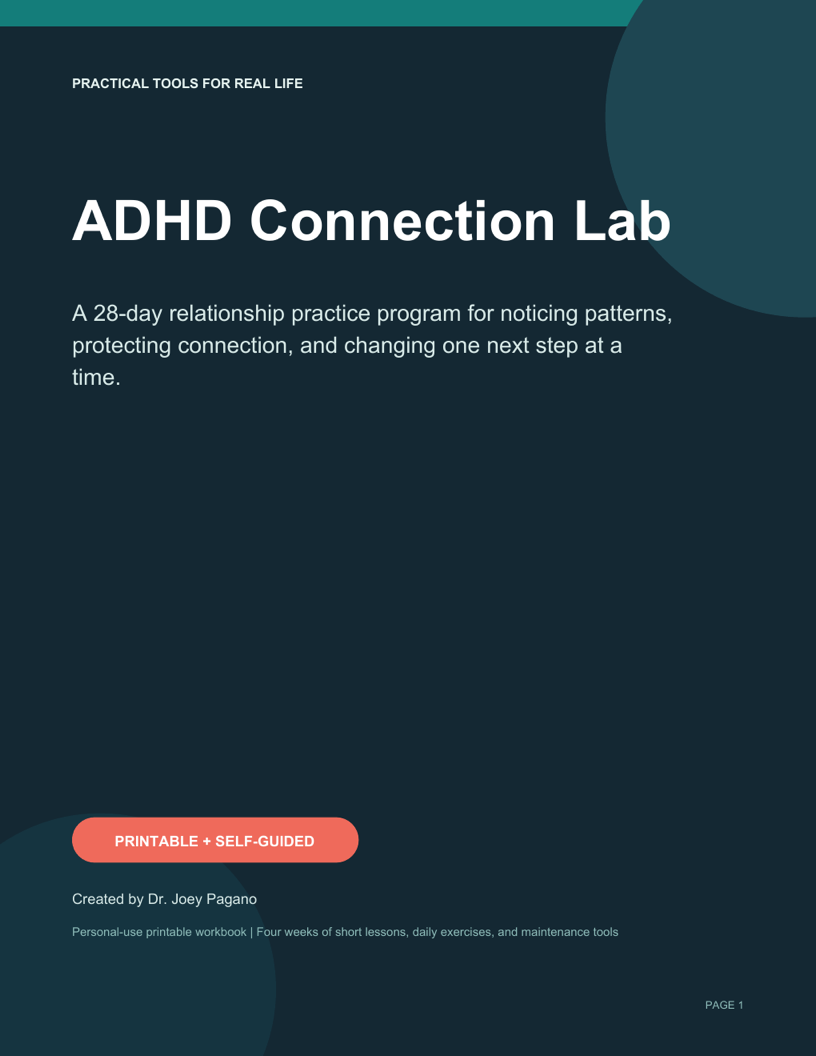
ADHD Connection Lab
28-Day Relationship Practice Program
A four-week, self-guided relationship practice program for ADHD-related overload, recurring conflict, mental load, transitions, intimacy, and repair.
$97View details
Explore practical ADHD relationship workbooks and planning tools for recurring conflict, mental load, transitions, closeness, repair, and daily follow-through.
ADHD can affect much more than attention. Working memory, time awareness, task initiation, transitions, emotional intensity, and sensory overload can all shape what happens between two people. A missed handoff may feel like indifference. A rushed transition may become an argument. An unfinished task may carry a very different meaning for each person.
These self-guided resources turn those broad challenges into visible patterns and smaller practices. They are built to support clearer language, more specific agreements, and a return plan after difficult moments. They can be used individually or with a willing partner, and they do not require a subscription or a live class.
Each product page shows the exact contents, intended use, price, delivery format, educational boundaries, and license before checkout.
28-Day Relationship Practice Program
A four-week, self-guided relationship practice program for ADHD-related overload, recurring conflict, mental load, transitions, intimacy, and repair.
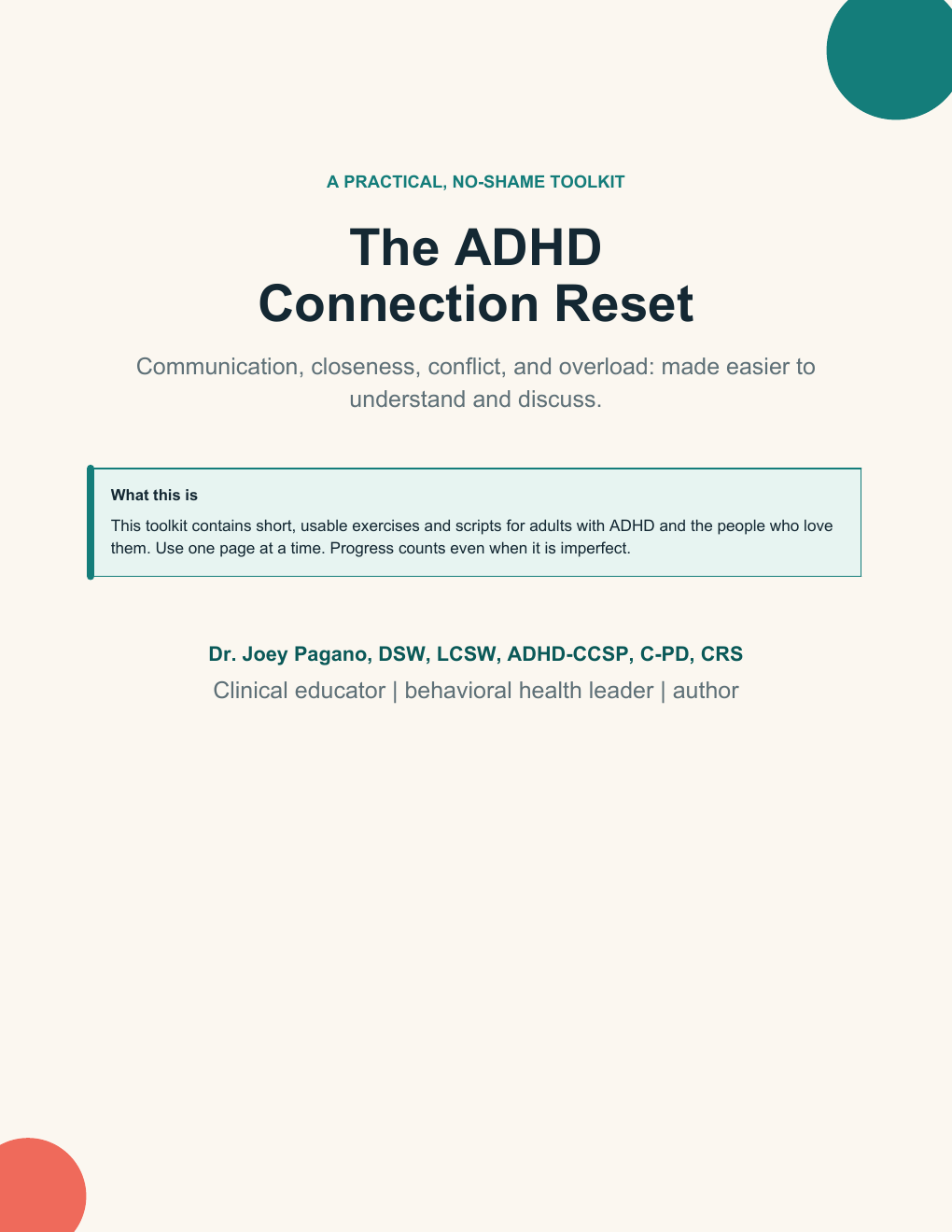
A practical relationship toolkit for recurring ADHD-related conflict, overload, mental load, touch, and repair.
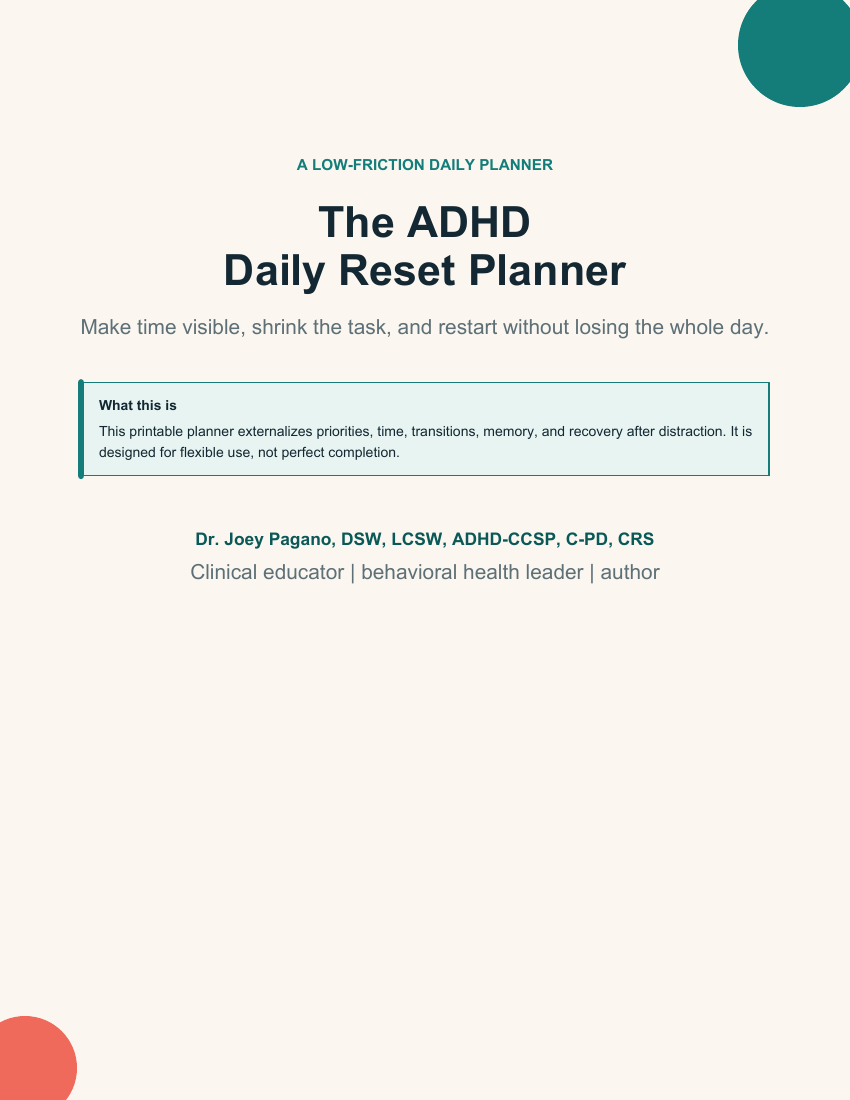
A low-friction daily planning system for priorities, time, transitions, memory, distraction, and restarting.
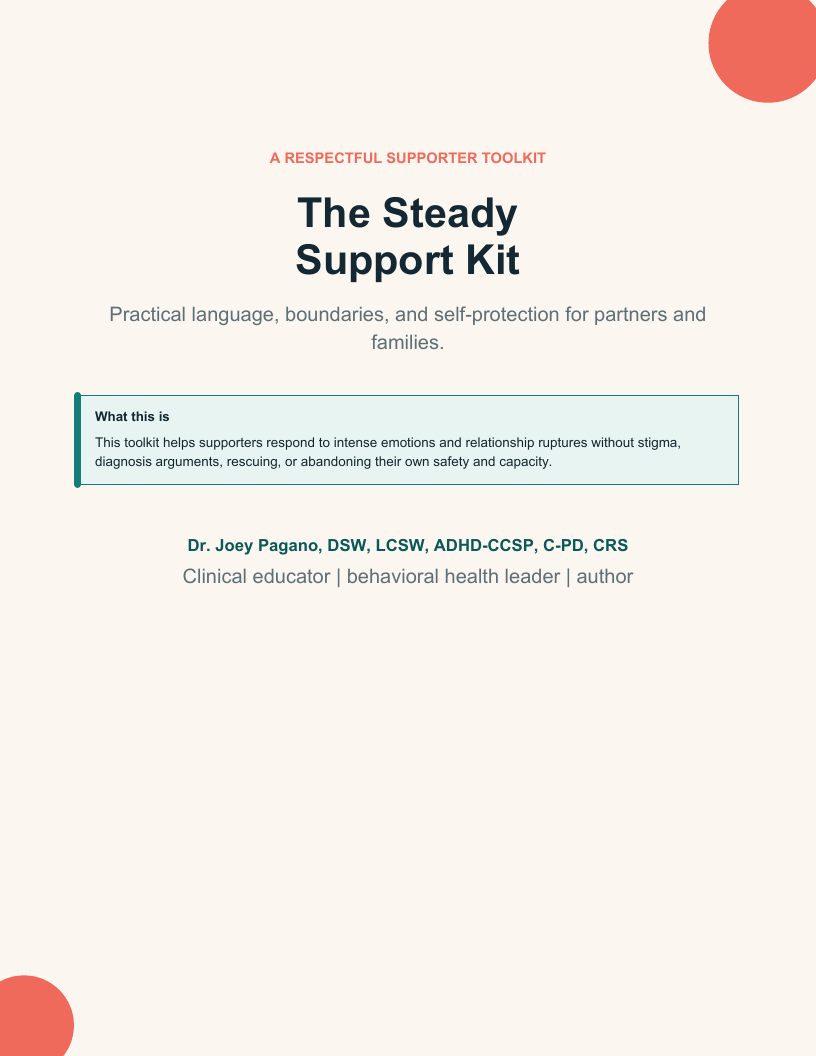
A practical guide for supporting someone through emotional intensity while preserving boundaries, consistency, and your own capacity.
These resources do not diagnose, prescribe treatment, replace individualized care, or provide crisis, legal, regulatory, accreditation, or human-resources advice.
Many recurring disagreements are loops: a trigger, a body response, a story about what the event means, an urge, an action, and an impact. When the loop stays invisible, both people may argue about character instead of the sequence that actually occurred. Mapping the sequence creates room for a different next step.
The goal is not to excuse harmful behavior or decide that ADHD explains everything. It is to separate observable events from assumptions, identify overload earlier, and make expectations concrete enough to follow. That may mean defining what “done” looks like, choosing a return time before taking a pause, or moving an important reminder outside either person’s memory.
The ADHD Connection Reset is a focused reference for conflict, closeness, rejection sensitivity, touch, mental load, and repair. ADHD Connection Lab adds a complete 28-day practice sequence for people who want repetition and a guided routine. The Daily Reset Planner is a lower-friction option for priorities, time, transitions, and restarting after the day changes.
Start with the smallest resource you are likely to use. A complete program can be valuable when you want a sequence; a shorter toolkit can be better when you need one page during a hard moment. Each product page lists the exact contents, intended audience, price, and license before checkout.
These resources are educational and non-diagnostic. They do not determine whether someone has ADHD, provide couples therapy, or replace individualized medical or mental-health care. They are designed to help people observe patterns, prepare better questions, and practice clearer next steps.
Yes. Several exercises include a solo path, so you can clarify your own patterns, requests, boundaries, and next actions without requiring another person to participate.
Choose ADHD Connection Lab for a structured 28-day practice, ADHD Connection Reset for a flexible relationship reference, or the Daily Reset Planner for everyday planning and follow-through.
Lemon Squeezy handles secure checkout and sends the download automatically after purchase. Product pages explain the included files before you buy.