
The Emotional Storm Reset
A practical, non-diagnostic toolkit for intense emotion, rejection sensitivity, urges, relationship rupture, and returning after a pause.
$29View details
Find non-diagnostic workbooks and printable cards for intense emotions, rejection sensitivity, urges, relationship rupture, grounding, boundaries, and repair.
When emotion rises quickly, access to language, perspective, and flexible problem-solving can shrink. The most useful tool in that moment is often not a long explanation. It is a short prompt that helps you name what is happening, lower the immediate temperature, and protect the next action.
This collection offers practical worksheets, quick-reference cards, and support tools for emotional intensity. The language is intentionally non-stigmatizing and non-diagnostic. You can explore triggers, body signals, stories, urges, boundaries, and repair without using a workbook to label yourself or somebody else.
Each product page shows the exact contents, intended use, price, delivery format, educational boundaries, and license before checkout.
A practical, non-diagnostic toolkit for intense emotion, rejection sensitivity, urges, relationship rupture, and returning after a pause.
A practical guide for supporting someone through emotional intensity while preserving boundaries, consistency, and your own capacity.
A guided reflection workbook for noticing triggers, timing, duration, context, impact, and what deserves professional assessment.
A harm-aware workbook for mapping relief-seeking patterns involving scrolling, spending, food, substances, conflict, avoidance, or other fast escapes.
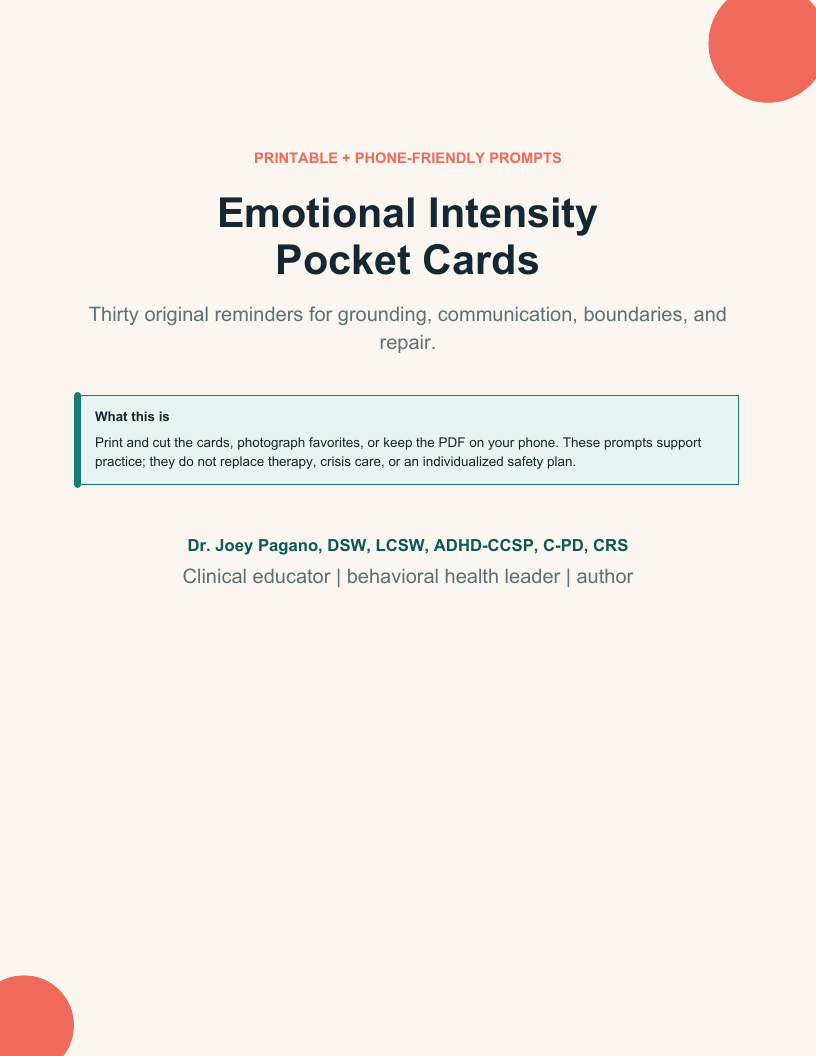
Printable quick-reference cards for grounding, validation, boundaries, pausing, returning, repair, and getting help.
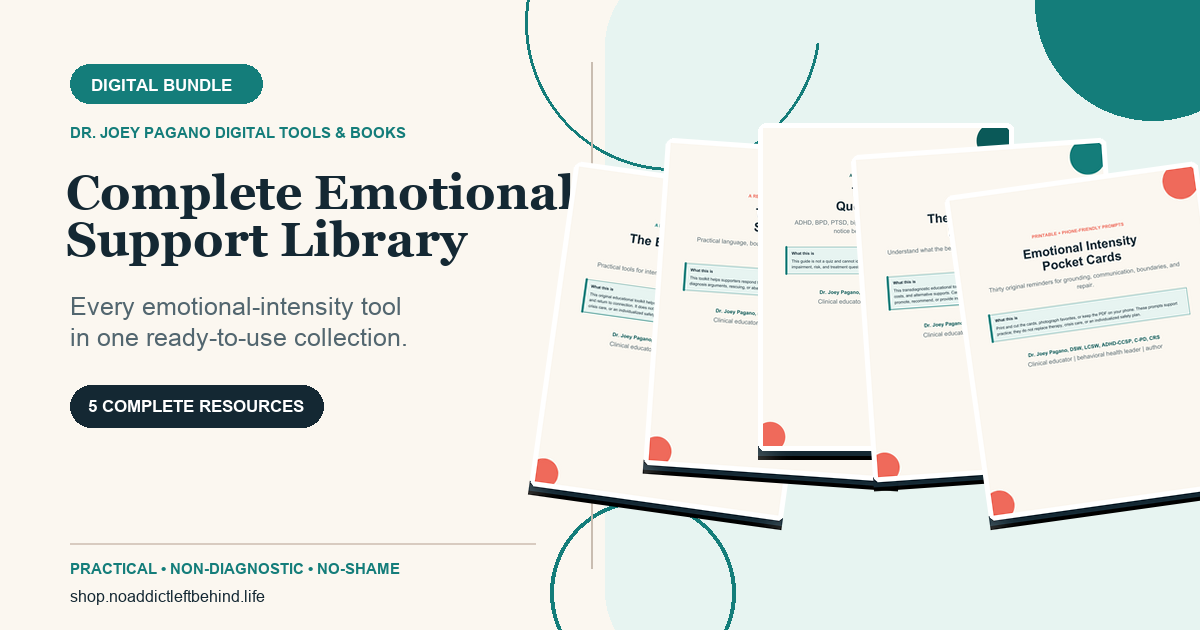
The complete five-product personal library for emotional storms, support, pattern questions, relief-seeking, and quick-reference scripts.
These resources do not diagnose, prescribe treatment, replace individualized care, or provide crisis, legal, regulatory, accreditation, or human-resources advice.
A strong feeling is real, but it does not have to make every decision. Mapping the trigger, body signal, meaning, urge, and likely impact can make the sequence more visible. Grounding, paced breathing, movement, sensory reduction, or a clearly timed pause may create enough space to choose a safer next step.
A pause works best when it protects connection and includes a return plan. The resources use concrete language for naming overload, setting a boundary, validating emotion without agreeing with every conclusion, and coming back to the conversation at a specific time.
Support is not the same as rescuing, absorbing mistreatment, or taking responsibility for another adult’s choices. The Steady Support Kit focuses on validation, clear limits, consistent follow-through, and capacity. Pocket cards keep short prompts available when remembering an entire workbook would be unrealistic.
For broader use, the Complete Emotional Intensity Support Library combines the connected personal-use resources in one collection. A smaller individual toolkit may be the better choice if you have one immediate goal. The product pages show what is included so you can compare before purchasing.
Pattern questions can help organize what you notice across time, settings, relationships, and stress levels. They cannot provide a diagnosis. If a pattern is causing substantial distress, danger, or impairment, bring your observations to an appropriately licensed professional who can consider your full history and circumstances.
No. They are educational, non-diagnostic resources for patterns such as emotional intensity, rejection sensitivity, urges, boundaries, and repair.
Yes. The Steady Support Kit and Pocket Cards are especially useful for supporters who want clearer language, boundaries, and follow-through.
Yes. The Complete Emotional Intensity Support Library groups the connected personal-use resources at a lower combined price than buying each separately.